Quick Contact!
For the fastest reply, call us at (678) 635-5429.

Quick Contact!
For the fastest reply, call us at (678) 635-5429.
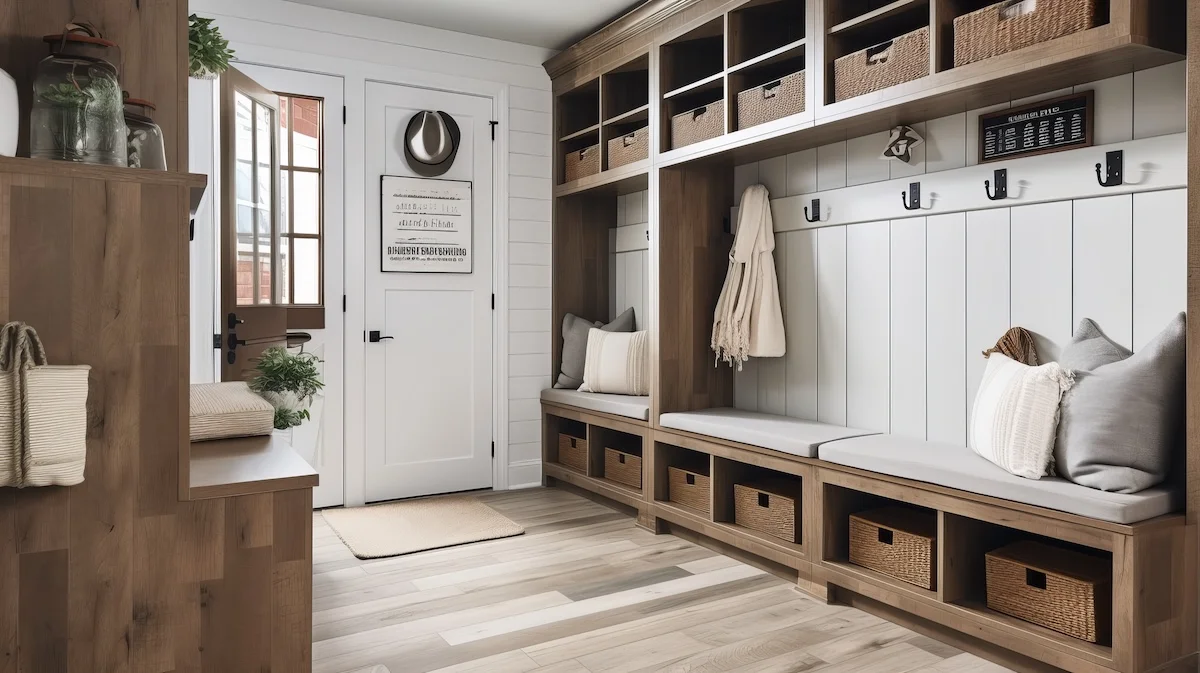
The entrance to your home sets the tone for everything that follows. Every day, shoes, backpacks, coats, keys, and groceries pass through the same doorway, and without a plan, that space quickly becomes cluttered. A well-done mudroom design solves this problem by giving everyday items a designated home right where you need them. Whether you have a dedicated room, a small landing, or a corner off the garage, thoughtful mudroom design can transform chaos into calm. In this guide, you will learn how to assess your entry, plan a functional layout, choose storage solutions, and create a space that stays organized for years to come.
A mudroom is a transitional space between the outdoors and the main living areas of a home. The name comes from its original purpose: a place to leave muddy boots, wet clothes, and dirty gear before entering the rest of the house. Today, mudrooms serve many roles beyond that original function.
Common mudroom benefits include:
Furthermore, a mudroom adds practical value to a home. Buyers often appreciate organized entries, and a well-executed design can make a home feel more functional and welcoming.
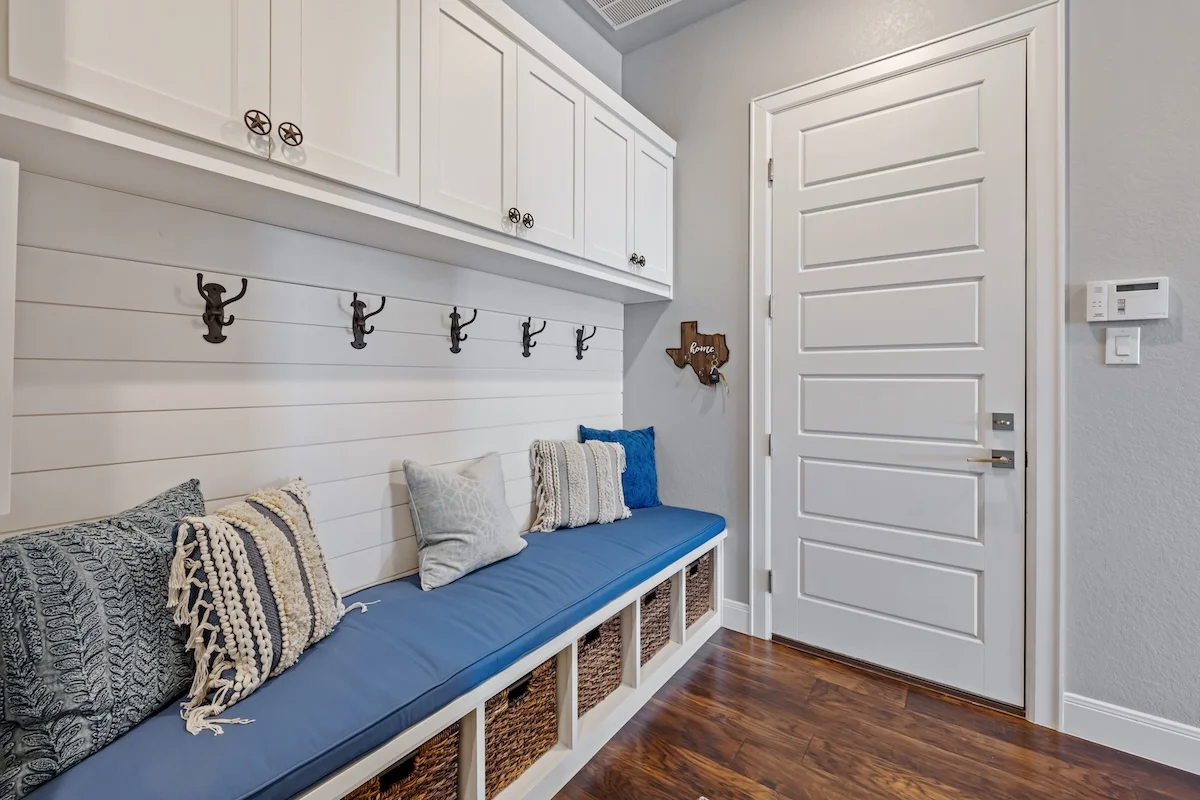
Before you design anything, take time to understand how your household uses the entry. Consequently, your observations will guide every decision that follows.
Start by answering these questions:
Next, track the flow of traffic for a week. Notice where people drop bags, where they hang coats, and where they struggle to find things. These patterns reveal the storage gaps you need to fill.
Mudrooms can exist in several locations within a home. Therefore, selecting the best spot depends on your layout and daily routines.
Popular mudroom locations include:
Moreover, consider how each location connects to other rooms. A mudroom that opens directly into a kitchen or living room should feel cohesive with those spaces.
A successful mudroom balances storage, seating, and circulation. Consequently, a thoughtful layout keeps the space comfortable and efficient.
Key layout considerations include:
Furthermore, a simple zone approach works well. Divide the space into a coat zone, a shoe zone, a bag and drop zone, and a utility zone for umbrellas, leashes, or cleaning supplies. This structure helps everyone know where things belong.
Storage is the heart of mudroom design. Therefore, choosing the right combination of furniture, built-ins, and accessories determines how well the space performs.
Common storage options include:
Wall-Mounted Hooks and Racks
Built-In Lockers and Cubbies
Benches with Storage
Shoe Storage
Open and Closed Cabinetry
Moreover, combining several storage types often creates the most functional result.
A mudroom must handle wet and dirty items every day. Therefore, practical features that manage moisture and dirt are essential to long-term success.
Helpful features include:
Additionally, a ventilation strategy matters. Good airflow reduces musty odors and helps wet items dry faster, which protects both your belongings and your home’s structure. The U.S. Environmental Protection Agency offers guidance on indoor air quality and how moisture and ventilation affect the air you breathe at home.
A mudroom should feel as inviting as any other room in your home. Consequently, lighting and design choices play a meaningful role in how the space feels.
Design tips include:
Popular design styles include farmhouse with shiplap and vintage hardware, modern with sleek cabinets and clean lines, and traditional with raised-panel doors and classic finishes. Furthermore, a cohesive style makes the entry feel like a natural extension of your home.
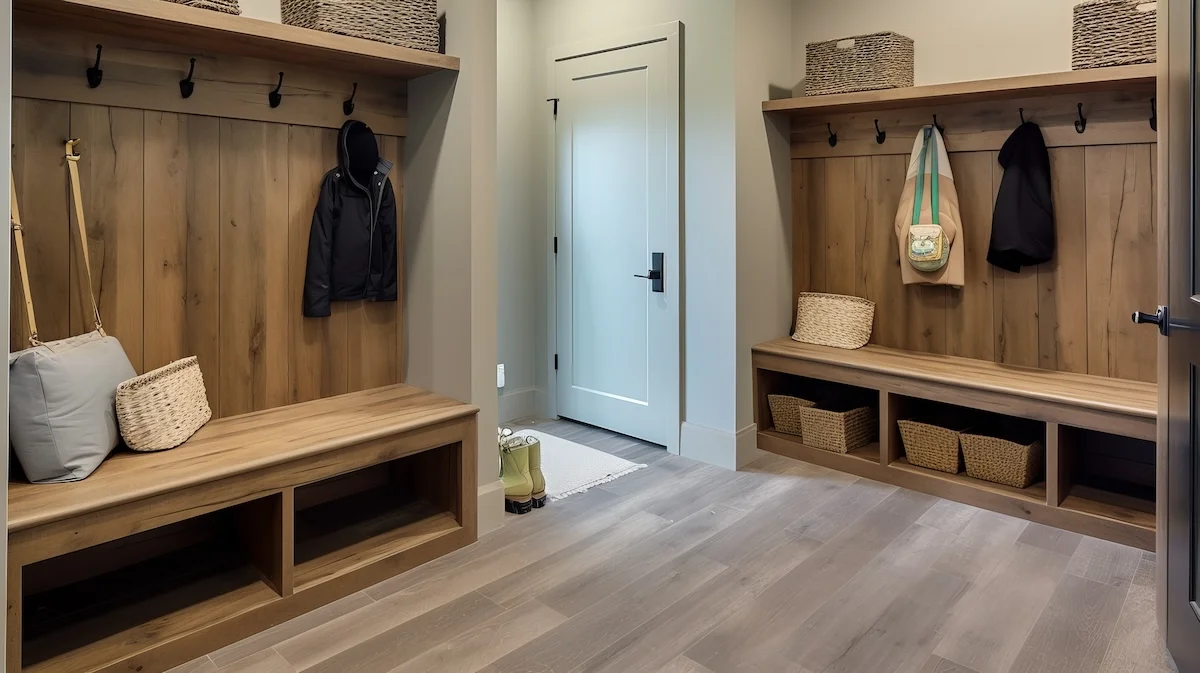
Different households have different needs. Therefore, customizing your mudroom design for your family ensures it truly works.
Consider these household-specific ideas:
Moreover, involving every family member in the planning process builds ownership and encourages everyone to keep the space organized.
Mudroom costs vary widely based on size, materials, and the level of customization. Consequently, understanding typical ranges helps you plan realistically.
General cost considerations include:
Factors that influence pricing include:
Furthermore, prioritize the features that solve your biggest daily problems first. Phasing the project over time can also spread out costs while still delivering meaningful improvements.
Even the best-designed mudroom needs regular upkeep. Therefore, simple habits help the space stay functional.
Maintenance habits that help:
Additionally, labeling bins and assigning each family member a designated spot keeps everyone accountable. Consistency matters more than perfection.
At Georgia Home Remodeling, we design mudrooms that fit the way real families live. We begin with a careful assessment of your entry, then recommend layouts, storage systems, and finishes that handle daily wear and Georgia’s humid climate. Our team coordinates flooring, cabinetry, lighting, and any plumbing or electrical work, so your mudroom comes together as one cohesive project. Every installation is backed by our comprehensive warranty for lasting peace of mind. You can also explore our full range of remodeling services to see how an entry upgrade fits into a larger project.
A well-designed mudroom turns a cluttered doorway into an organized, welcoming space. By assessing your needs, planning a smart layout, choosing durable storage, and maintaining good habits, you can create an entry that serves your household every single day. Whether you want a simple update or a complete transformation, thoughtful planning makes all the difference.
Ready to organize the entrance to your home? Contact Georgia Home Remodeling today to schedule a consultation and start designing a mudroom your family will love.